

How Will VR And Digital Marketing Intersect
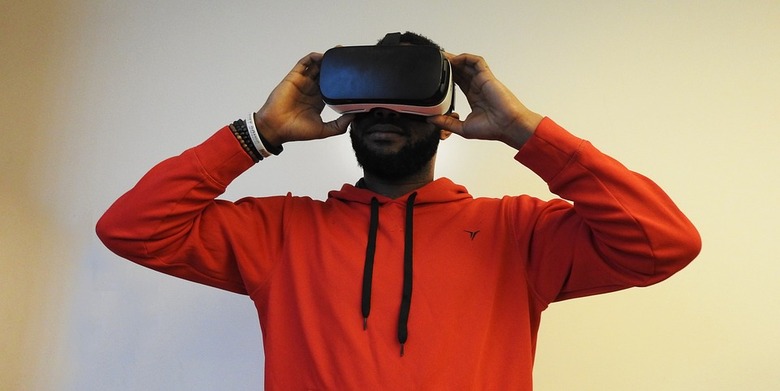
Virtual reality is going mainstream. Big technology companies, including Samsung and Google are putting loads of money out to gain a footing in this space. This, along with the increasing number of people who are purchasing VR technology for personal use, has made virtual reality very interesting to brands. Of course, for them, the biggest draw is the potential to combine virtual reality technology with digital marketing.
The New Opportunities For Digital Marketers
Yet all of this is too new to be able to state definitively how marketing and VR will come together, but it is certainly interesting to think about the possibilities. Experience is a big draw. Digital marketers who are already using technology such as Meerkat already know this, as do those who are producing interactive content. Imagine a brand such as Red Bull giving VR headset owners the chance to experience the Flugtag using virtual reality technology.
Probably, the most intriguing thing about combining VR and marketing are the options that marketing professionals have in using this technology to create amazing interactions with customers. Think of luxury hotel giving potential tourists the ability to walk through their hallways and into their most lavish suites. Everything is in 360 degrees, so the customer feels as if they are right there. That's sure to get more attention than a flat floor plan and some pictures on a website.
According to Shai Aharony of Reboot Online, "Brands are eagerly approaching marketers about virtual reality possibilities now that they realize this technology is beginning to mainstream." "Because the consumer price point is lowering as well, now seems the time to get involved", she clarified further.
How Brands Are Experementing with VR
One brand that is experimenting with VR is Mcdonald's. Because there is now technology available to create VR viewers from paper, people don't have to own or purchase expensive hardware to enjoy these experiences. Because of this, including VR technology in Happy Meals is now something that is perfectly doable. Other VR technologies are now based on smartphone technology. Then there is Oculus Rift. This technology was purchased by Facebook two years ago, and is essentially the major development that has driven this new virtual reality craze. Now that the product is actually making it out of the factory doors and into the hands of consumers, excitement is really peaking.
Because Facebook already has such a strong hold on the online marketing community, it is safe to say that Oculus Rift will be the technology of choice as marketing campaigns begin using virtual reality. The company is already creating 360 degree videos and sharing that content for Oculus Rift users. This will eventually lead to VR as an interactive experience rather than a passive experience.
To go into Facebook's influence in this area, here are a few things to consider. When a brand uses virtual reality to create an appealing experience for customers that make whatever product or service they are selling seem more appealing, more exciting, or more useful than before, they are limited to the audience who was likely already interested. They are also limited to the audience that is aware of them.
Nobody is going to experience that luxury hotel suite in virtual reality, unless they are already considering renting a room. Facebook users are different. When they are on that platform, their desire is to take in any and all content that is compelling to them, and then to share that content if they are moved to do so. Because of this, it will be Facebook's actions or lack of actions that influence whether or not VR truly gains mass appeal. After all, it will most likely be Facebook who brings VR to people in a way that truly hits home. This is, of course, using VR to connect people to one another. Imagine, if you could be there at a child's birthday party as if you were sitting in the room with other guests, even if you were an ocean away.
The brands who are most successfully able to use VR for marketing purposes will probably be the ones who are already successful content marketers. These are the folks who know how to use technology and marketing to create relevant and often emotionally compelling experiences for their audience.