

Lyft and Baidu start testing robotaxis in London
Baidu's Apollo Go RT6 will start appearing in the UK capital, with test drivers aboard to start with.
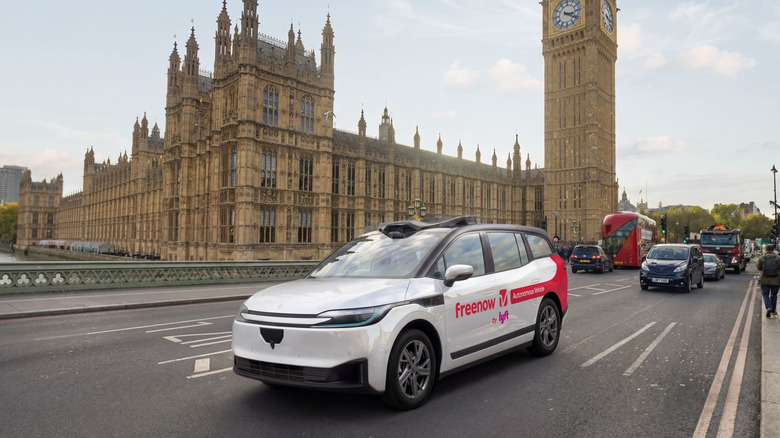
As it promised last year, Baidu has started testing its robotaxis in London along with partners Lyft and Freenow, the companies said in a press release. Baidu's Apollo Go RT6 will start appearing in the UK capital (with test drivers aboard to start with), while Lyft and and Freenow, the German taxi company Lyft now owns, will take care of booking passengers starting next year.
The trials are part of the partnership between Lyft and Baidu, with the aim of eventually deploying thousands of autonomous vehicles across Europe. To expedite that plan, Lyft acquired Freenow last year to take advantage of its large taxi network operating in the UK and Germany.
Lyft and Baidu are the latest companies to announce robotaxi testing plans in London. Earlier this year Waymo started testing its Jaguar I-Pace vehicles in the city with human safety operators aboard. Uber and its own self-driving partner, Wayve, are also preparing to launch trials this year and are now allowing customers to sign up on an interest list.
Dozens of Baidu's Apollo Go RT6 vehicles will be operating as part of the tests in the Brent borough of London, the companies said. The network will eventually operate alongside Freenow's established taxi and private hire network. The Baidu robotaxi service will be called Freenow by Lyft and expects to invite the public to reserve rides sometime in 2027.
The exact timeline will depend on regulatory approval, in coordination with Transport for London (TfL) and the UK government. The latter is in the midst of drafting autonomous vehicle rules and recently launched a robotaxi pilot program.