Jacob Quigley

Engadget Editorial Policies

The unique content on Engadget is a result of skilled collaboration between writers and editors with broad journalistic, academic, and practical expertise.

In pursuit of our mission to provide accurate and ethical coverage, the Engadget editorial team consistently fact-checks and reviews site content to provide readers with an informative, entertaining, and engaging experience. Click here for more information on our editorial process.

Stories By Jacob Quigley

  • Regular Writing Has Been Digitalized To The Core

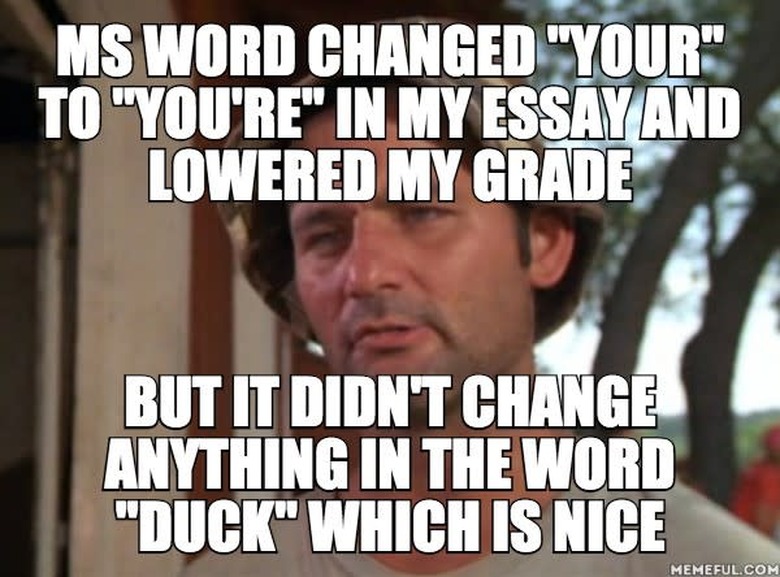
    As a 90s kid I still have a clear picture of how computers invaded and changed our lives. I was in middle school when the changes took actions. The moment when all the teachers started asking us to type papers instead of writing them with a pen was the beginning of digital era for me. I remember how some of our teachers were outraged by these new tendencies: they believed that by typing the words instead of writing them we do half the work, and to be honest this frustration didn't make any sense to me. But it does now It wasn't a sudden fall Back in the middle school the process of using a computer to write papers didn't actually affect my grades: the only type of cheating available to me was using Microsoft Word's spelling checker to eliminate possible mistakes. But to be honest, XP's Word was not always right and could not be trusted 100% of the time. But the amount of mistakes in my essays was notably smaller, so I kept that going for me, which is nice. New Opportunities As I grew a bit older and went to high school, I learned that the opportunities are actually limitless, I could: Improve text's readability (Hemingway Editor) Check punctuation and grammar on another level (Grammarly) Download already written papers (before schools started using anti-plagiarism software) Even pay somebody to write for me (but unfortunately I didn't know how to determine a fraudulent essay writing service so I kind of flushed hundreds of dollars down the toilet, and I deserved it) Use essay generators to make up a paper (the result was never even remotely good, but still) All of those possibilities kind of spoiled my understanding of importance of actually learning how to write. Why should I worry about all of the rules if the machine can do all the thinking for me? Sadly I was not the only one affected by this idea. All of my classmates were thinking the same, so it didn't even make sense to me to have other opinion. We don't write like we used to It wasn't until recently that I realized how it is actually important to learn some analog writing. Don't get me wrong, technology is sometimes blissful and really does help the entire world with more than just getting a quick laugh from a cat meme. However, as our society is an inherently lazy place, we become too complacent and expect technology to solve all of our problems. This type of mentality is not only dangerous, but it shows how much more as a society we have to learn. The fact that with a click of a few buttons, anything and everything we need appears on our screen. Though sometimes simplicity is beautiful, it has its dangerous side effects. Slowly but surely, we as a society will learn that.

    By Jacob Quigley Read More
  • The Web We've Known Has Changed Forever

    As one of my university projects I had to create a website that somehow resembled a news portal. I got to choose myself what would be the information I post there, how it looks, etc. The whole task made my hair go grey as I know nothing about coding except for basic understanding of HTML. Still the whole thing looked kind of interesting and even thrilling. My dad was a computer geek back in thee 90s, so I decided to call him for help. He had a bit of experience with site building but it was long ago so basically we were learning about the whole thing together. After a sleepless night, my project with reviews on scam essay writing services was ready, you can even take a look at it: http://collegeessaywritingservice.reviews/ . Nothing fancy, I know, but think about it: it took us only one night to make this thing go live. I've heard the stories from my father about how he spent weeks to do something similar. And now it is just as simple as going to Digital Ocean, reading a few guides and investing ridiculously small amount of money to start the whole thing. Even a third grader can do it easily. But is it a good thing? I mean, of course, you need some serious knowledge and experience to make something serious, but still anybody can make a real site with its own domain name, like a real thing. Doesn't it lead to lettering the whole web by low-quality pages (like mine)? Creating a web-resource stopped being something serious, which leads to irresponsible usage of the internet. Wouldn't it be better if there were only original and valuable sites on the web?

    By Jacob Quigley Read More
  • Apple Watch: Best Friend of College Students

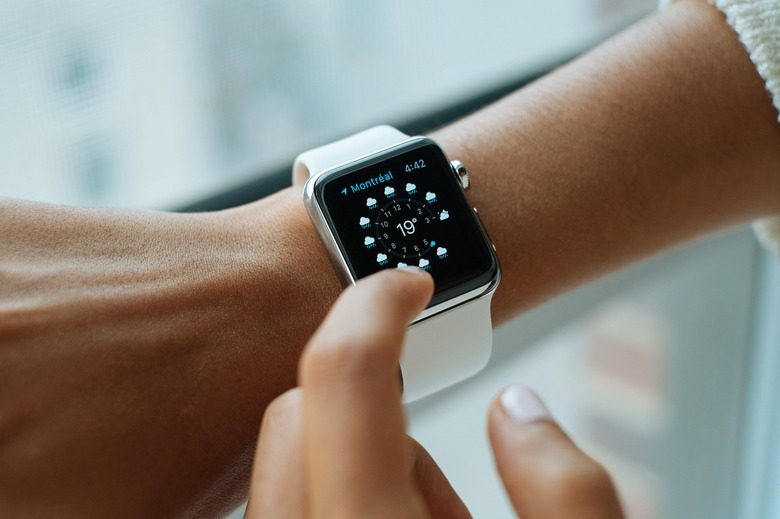
    Okay, it may be a bit frowned upon, but most of us have done it as desperate college students. We've written a cheat sheet of math formulas on the inside of our calculators, or watched the movie instead of read the book, or even devised a complicated Slacker Morse Code of taps to crowd source multiple choice answers. We go to extraordinary lengths to cheat, sometimes putting in more work to cheating than if we'd simply done the work from the start. College students are strange creatures like that. Apple has graciously decided to lend a helping hand to its biggest demographic – millennials – as what I can only imagine is an underhanded sort of "thank you" for buying so many iPhones. They're helping us up the cheating game. The Apple Watch or artificially intelligent assistant, is so easy to use and has so many helpful, crowd sourcing apps that it's almost like it wants you to use it cheat in class. It has all the benefits of carrying a cell phone around on your wrist, except that your professors don't see you bending over your desk to text your roommate about that one calc formula you forgot, or Googling how to write your essay online during your English final. For example, there's an app called Slack that works basically as a small group text chat, except it only goes to your Apple Watch. So you, that girl you like, her unfortunate boyfriend, and your genius roommate can all communicate during your history exam without texting or whispering to each other. When was the Declaration of Independence written? Let's consult Harry across the lecture hall without even reaching for our phones. Freaking revolutionary. Another fantastic app that probably has practical applications but seems tailor-made to help you cheat: Viki. Viki is an app that literally brings every student's last-minute savior – Wikipedia – straight to your fingertips. And your wrist. It's streamlined, fast, easy to navigate and doesn't even require your iPhone to be on (just in case your professor is one of those hard ones who requires you to turn in your phones before an exam). While a bigger screen would probably be helpful in navigating a site like Wikipedia, Viki helps prioritize information so that you can get the most popular search results to your watch right away. If that's not perfect for consulting the Internet about Henry VII's birthday, I don't know what is. Yet another, personal favorite of mine: Instapaper. It lets you download articles, convert them to audio files, and then listen to them through Bluetooth headphones. This is some next level cheating. If you've always had problems writing essays on the spot and had a few ideas written down before hand, you could bring them with you and listen to them during your exam. You could have all those ideas that you thought of last night, when you were relaxing on your couch with a glass of wine feeling like a genius, being read in real time to you in your classroom, when you're stressed as hell about this final essay and too sweaty to even remember how to spell your name right. Now, I'm not saying I condone cheating in any way. Students can and should use these apps the way they are meant to be used and succeed on their own merit, and Apple Watches have plenty of respectable, genuinely helpful and revolutionary ways to help teachers and students in and out of the classroom – but that's not nearly as much fun to talk about.

    By Jacob Quigley Read More